Showing posts with label neighborhood. Show all posts

Sunday, September 9, 2018

Martin Turnbull's blog and website

For those who love Hollywood history, a swan dive into Martin Turnbull's incredible collection of early Hollywood photos and ephemera could easily take up a few hours, or several days.
Turnbull is the author of the Garden of Allah novels that cover the famed Sunset Blvd.hotel from 1927 to 1959. Eight novels so far, with a ninth scheduled for publication this November. The first novel (right) starts in 1927 as fictional characters arrive at the Garden of Allah--characters that populate all the books.
Even if you're not looking for books to read, though, you might want to visit the website--just to look at the pictures.


Here's what you can find on Turnbull'ss website:
  • Timelines of each decade. What songs were playing on the radio? What was the news out of the big Hollywood studios? What world events affected people?
  • A photo blog of the area over the years, where I found the picture above of a Red Car on Hollywood Blvd in the 1950s. Or the one at left of Cathay Circle Theatre in 1931, all decked out for a movie premier. 
  • A bibliography, listing all the books about Old Hollywood that you might want to read.
  • An alphabetical list of Hollywood places -- restaurants, studios, hotels, theatres, and all sorts of hangouts, some with pictures or menus 
Seriously, there is everything here that you'd need to sink into a wild fantasy of life in Hollywood during its most exciting times. All you need is a glass of scotch and a sofa to stretch out on, and you're set. Go enjoy!

Thursday, June 28, 2018

San Pedro Community Gardens

Off the 110 in San Pedro, along one of the many slopes that are left to grow wild in San Pedro and the Peninsula -- which is riddled with little canyons, crevices, and hills -- gardens bloom with fruit from all over the world. Filipinos started gardening here over fifty years ago, and the plots grew to cover six acres. Retirees and urban farmers from many cultures grow tropical fruits, bean trees, vegetables, potted vines of tomatoes, and more.

The picture at right is from a 2011 post on LA Eastside.

The problem that confronts this maze-like collection of gardens and makes it newsworthy? Water is becoming scarce, and so some of the gardens have been abandoned. But not many.

The gardens have a website: sanpedrogardens.org/, and it has a laser focus: the status of water. There I learned that few years ago a pipe broke, with devastating consequences. Now, the issue is that the landlords are just cutting off the water for most of the day.

Over a month ago, the Los Angeles Times ran a story about the San Pedro Community Gardens, and they have a video posted on their site as well. So you can see, in their own plots, Frank Mitrano, Carol Christian, and David Vigueras, who says: "It's not a garden. This is a universe."

At left is one of the photos that accompanied the Times article, which was packed with information.

The land belongs to Los Angeles City's Dept. of Sanitation, according to the Times. During the drought, they cut down on the water when they realized that hundreds of thousands of gallons a day was being poured into the gardens.

No bad guys here: there was a drought. There is still reason to conserve water. It's driven some of the gardeners out, but others are making do. The water flows only during select hours of the day, and pipes are old. Gardeners are doing what they can to collect the water their plants and trees need.

At right is a year-old picture from the Garden's website, showing the results of no water on some of the plots.

I applaud these gardeners and think we should have more of them. I will shorten my showers for them. I have no talent for gardening and am amazed at what men and women do to grow and nurture plants from the dirt.

If you'd like to know more about community gardens in our area, there's not only a website for the Los Angeles Community Garden Council, but Yelp has a list (of course) of the top community gardens, and CurbedLA has a 2014 list of the best.

Monday, December 19, 2016

Tar Pits Essay by David Ulin

I should have known: good articles always show up in threes or more. Should have held off on yesterday's post a day, because now I have something to add to it: an opinion piece fro David L. Ulin that appeared in the December 19 LA Times: "What Lies Beneath L.A."

It's all about the thin veneer of metropolis we trust so heavily in, and the fractured, tarry landscape beneath.

The Times ran a picture of the LaBrea Tar Pits diorama in front of the Page Museum, but I prefer this picture "borrowed" from another blog that shows tar seeping up through a sidewalk on Wilshire. This may be the very seep that Ulin mentions several times in his essay. I think it's a better illustration of the tar today (mammoths are nice and all but can we really relate to one being stuck in goo?) and the reminder of what's really beneath the solid ground on which we place our trusting feet.

The picture comes from a 2015 blog post by Geoff Manaugh. Actually his BLDGBLOG post is a reprint of a post he'd written for The Daily Beast, and goes into the same topics Ulin addressed, with even more details: the 1989 methane gas explosion that took out a dress store on a strip mall, also the fault of the tar pits beneath. The temporary nature of our structures compared to the forces of nature underlying them. How we've taught ourselves to ignore all this.

Both are fine reading, especially if you need a break from Modern Life.

Saturday, June 25, 2016

Sunday Reading: How LA's Boulevards Compare to Other Cities', and What That Means

Studying public spaces fascinates me.

Banking and business districts can be very forbidding, for example. Even the public art is cold and uninviting. I can feel excluded, as if I were being told to move on. There is no place to linger and enjoy the view outside most of those huge buildings.

They and their streets "create an interesting visual panorama, one as aggressively functional as an oil refinery."

That quote is from the article I link to, a few paragraphs down.

Makes you speculate on why. Why do those big banks make their buildings so impersonal, cold, and exclusive?

When you look at a city's public space -- even an ancient city -- you can learn things about the culture you might not have known.

  • Maybe it becomes clear that a lot of everyone's time is spent outdoors - certainly the case in Paris, above.

  • Maybe the division between rich and poor is sharp and drastic. (Let's say the big houses were up a hill. The sewage flowed downhill. Would not want to live there!)

  • Walls surround some areas -- were these ghettos? Enclaves of royalty? University grounds? Religious sanctuaries?

  • Do all classes shop in the same place? Like the Zocalo in Teotihuacan?

  • Did constructing new parks and broader avenues in an old city mean that social barriers were breaking down?


Public spaces can unify or divide people.

Which is why a very long article by Doug Suisman in Boom California has captured my attention, but I've had to read it in bursts, as if it had different chapters.

Suisman is an architect and urban designer. In this piece he examines all the different cities he's lived in, from his Hartford, CT childhood to Europe to NYC to LA, where he lives now. And he examines each as a part of his education, and tells us what he learned from the places and the way they were laid out.

In Los Angeles over 30 years ago, he finds a city made by engineers, and yet as you look down the residential streets you find colonnades of stately trees. Through the 1980s and 90s and into the 21st century, Suisman tracks the changes along our streets as his own architectural firm was involved involved in the transformations. Global climate change, terrorism threats, economic ups and downs, gas prices, and many other factors all play a role in how lively our streets are, and how we enjoy them -- or not.

I'd never heard of such a thing as studying and manipulating public space till 15 years ago. It's possible that in 30 years from now, all this speculation will be old hat.

But for now, Suisman's ideas make a great read for a hot Sunday.

Monday, February 29, 2016

Mosaics on Broadway!

Ta da! She's out of San Pedro! Well, virtually, anyway.

This picture is from the Piece by Piece Facebook page, and I hope they don't mind me displaying it. It shows the beautiful mosaic wall at Broadway Village II, 5101 South Broadway in Los Angeles. Title: Broadway Blooming. The 40-foot-wide mosaic was built by the community in 2015. as you can see in this picture from the Piece by Piece website:

Financial support came from the California Arts Council and the Los Angeles Department of Cultural Affairs. That funded local workshops so that over last summer, residents could come together to create the mural--making flowers bloom on mesh during Open Studio Fridays.

Artists both experienced and un used recycled tiles and materials for the blossoms, But that's not all--there were workshops on Skid Row and other locations, and artists from around the world assembled and mailed more mosaic flowers for the wall, including Chris Piloto and his band of street children in Rio de Janeiro.

500 flowers. Those were mounted on the garden wall as you can see here.


Piece by Piece has been working with Broadway Village II since 2008 on many projects, and this wall, completed last October is just one of them. From their website and press releases:

Piece by Piece is a non-profit organization operating in South Los Angeles and Skid Row to fulfill its mission to provide low-income and formerly homeless people free mosaic art workshops using recycled materials to develop marketable skills, self-confidence, earned income and an improved quality of life. 

You can view and buy smaller art pieces by the mosaic artists of Piece by Piece here.  They've also opened their own gallery space at Mercado La Paloma, at 3655 E. Grand.

Wednesday, January 13, 2016

Reading About LA

Here are some wonderful things to read, for when you have some free time:

  • Is someone gunning down peafowl? In semi-rural, moneyed Palos Verdes? Well, they were. That's the topic of a well-researched article in Los Angeles Magazine by Mike Kessler. I love that he interviewed Cat Spydell, whom I've met a few times. I even shared a booth with her and the mammoth sweetie-dog Drinian, just before she found and bonded with the baby peacock called Radagast. (All three are pictured at right.) Kessler also interviewed a few of the people who hate peafowl, so it's a pretty well-balanced report.

  • For a juicy report on the Playboy Mansion and its neighborhood, its history, the dimensions, a bunch of links, and a half-dozen pictures of the fabled estate, go to CurbedLA. Or check out this fact-heavy piece in the Wall Street Journal.

  • Want something to do, rather than something to read? The Night on Broadway is FREE! Takes place January 30 and celebrates the 10-year effort to "Bring Back Broadway", which is also the name of the host organization. Look over the Event guide that shows the block-by-block plans. Ferris wheels, art walks, vendors, a Festival Stage, dancers and vaudeville-like acts inside the theatres--maybe some films as well.

  • How did the Army Corps of Engineers get involved with the LA River? It all goes back to 1938 and some terrible flooding here. Actually, it goes back even further. KCET presents Carren Jao's excellent history of the Corps' expanding growth and oversight. That means, in the 21st century, that even something like allowing kayakers to use the River must gain approval from the Corps. The picture below shows the Army Corps of Engineers at work, building the bridge at Avenue 43 over the Arroyo Seco, later in 1938.


  • Saturday, January 2, 2016

    "Private Space Masquerading as a Public Space"

    That's how David L. Ulin describes Los Angeles's streets in 9-1/2 minute interview on KPCC. He said, since we stopped using the streets as public space after WW2--using them instead as private spaces as we drove, enclosed in our cars, from one public space to another--our streets are "now a private space masquerading as a public space."

    That's an intriguing concept to me. I got exposed to the idea of "public space"--a very strange idea to me at first--about 15 years ago when I met graduate students who were veering away from history to study Public Spaces in History: how designing a city or parks or streets actually shaped civic growth and culture, separating some groups from others or inviting them in. And of course, how those spaces changed over time, and what that meant about who was in control of the space.

    If that subject intrigues you, there's a TED talk on it, given by Amanda Burden: "How public spaces make cities work."

    Ulin also offers an essay called "Writing the City," which is basically a bunch of brief discussions on books about walking through cities, like Walker in the City, by Alfred Kazin. Which lead up to his contribution to the genre.

    So I've made this my featured book. At $15 for the hardcover, it's quite a bargain, and since the book just came out in October it has few Amazon reviews.

    And now I must go put in a request for the book from our library. Then I will review it.

    Have I mentioned how important Amazon reviews are to authors? More reviews means more visibility. Please, please support authors you like by writing reviews, however brief, for their books!

    Wednesday, November 26, 2014

    Surfridge, Torrance, Eagle Rock & More

    Here are a few stories on Los Angeles history to entertain you while the turkey is roasting:

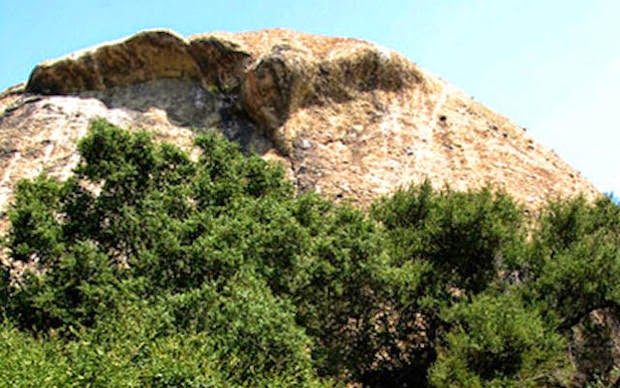
    • A collection of how LA neighborhoods got their names. I know the LA Times has printed lists like this recently, but this one is from Mental Floss and has a great picture of Eagle Rock (right). Why does that appeal? Because in the 1920s my uncle used to ditch school and eat his lunch while hanging his legs over the rock edge. 

    • From MessyNessyChic, the history of Surfridge, an area of Playa del Rey (or as it was known, in the 20s and 30s, Palisades del Rey). Lots of pictures, but the area is nothing but cracked sidewalks now--a victim of our air traffic.

    • A story about the Uncertain Future of the Lummis House, from the LA Times

    • Like Pictures? Indulge yourself here, with tons o' pictures of the Warner Huntington Park Theater, courtesy of LA Curbed. 

    • Also from LA Curbed, a story of Ye Olde Torrance, close to my heart since I was born and raised there. This tale goes back to 1912 and the planning of the city as a workers' or company paradise, sorta. 


    Wednesday, September 17, 2014

    Downtown Building Projects and the Hall of Justice

    I was going to blog aboaut a mosaic on Monday but my fingertips melted and got stuck to the keys. I managed to knock over a glass of ice to cool and unstick them, but then the ice and water got into the keyboard and you know how that goes.

    Making up a more credible story, or making up anything at all, takes too much effort when it's this hot.

    However--I did find a splendid list from LA Downtown  News that updates every downtown project you could think of, and then some. Did you know, for example, that the Hall of Justice, so often pictured in Perry Mason, is about to be reopened, twenty years after red-tagging due to the Northridge earthquake? The ribbon-cutting is in three weeks.

    Updates on no less than 93 other projects--from Amp Lofts to the Wilshire Grand replacement--are included in the LA Downtown News list.

    Did you know further that the Hall of Justice was made of the same stone, from the same quarry, as our City Hall? It is and the stone is Sierra Granite. That tidbit is from D. J. Waldie, who writes at KCET's website that the "inspiration for the hall's tall base and upper stories of columned walls seems to have been the tomb of King Mausoleus at Halicarnassus."

    That tomb was one of the Seven Wonders of the Ancient World--it's the one I never remember. Helicarnassus stood in what is now Turkey, but the tomb was destroyed at least 800 years ago. It's middle third (in terms of height) had 36 columns with statues between them--reportedly--and that's the part that may have inspired the design of our Hall of Justice.

    No one really knows what it looked like because it's in ruins now. That's one model at left, but there are many more elaborate portrayals.

    To me, the building evokes the 1950s, which is silly since it went up in 1926. Blame Raymond Burr.

    The KCET article is a fun read, with pictures and a brief history of the building and its famous, though transitory, residents--like Charles Manson, whose holding cell may be a historical attraction when the Hall reopens. Ghosts are mentioned, as are a local whorehouse, and mice that got high from marijuana held in the evidence room of the Sheriff's offices. If that doesn't pique your curiosity nothing will.

    County offices--including the Sheriff and the District Attorney will be moving back into the Hall of Justice around the end of the year.

    I'm signing off with my name. I've just learned that when this blog goes out to subscribers, the entire post appears in an email. That's great, but since the email does not include the side column showing me or my book (The Boomer Book of Christmas Memories) or picture, or any of the other features there, I was advised that I should at least sign my name so that people associate the post with me. So until next Monday--Adieu from Vickey Kall.

    Saturday, September 6, 2014

    Ace Hotel and United Artists Theatre--and Schultheis

    An editorial in the Los Angeles Times described new tax benefits to owners who restore buildings that are on either the National Register of Historic Places or the California Register of Historic Places. The benefits are mostly for businesses, but some residential buildings could earn their owners tax breaks as well.

    It's all very interesting but what really drew me to the piece was this incredibly lovely picture of the 1927  United Artists Theatre, which ran with the editorial. This refurbishment shows how well the new law will work (though it's not in effect yet) because the 1600-seat theater is part of the Ace Hotel complex in Downtown Los Angeles.

    The Ace Hotel IS the United Artists Building and Tower. It opened earlier this year (Valentine's Day) at 929 S. Broadway, (or is it 933? I think that's the original address) and preserved all the outward beauty of the building while creating minimalist, functional hotel rooms of varying sizes on the inside, as well as a few meeting venues.

    Here's the Ace's theatre website with pictures, info, and a calendar.

    Percy Walker and Albert Eisen were the architects of the 1927 building, and they got around some local height restriction ordinances by creating the 50-foot "dummy" tower that still sits atop it.

    At the end of this post are some "then and now" photos, the oldest from the Los Angeles Public Library's online photo collection.

    From the beginning, most of the offices in the building were leased out to oil companies. First it was California Petroleum Co., then later the building became known as  the Texaco Building. In the 1990s, it was the home of Dr. Gene Scott's University Cathedral.

    But this post is focused on the movie theater, not the entire building. Isn't it gorgeous? Divine decadence is the phrase that comes to mind.

    The vaulted ceiling--to me, it looks like a dome but the site refers to it as a vaulted ceiling--has thousands of tiny mirrors, and the palace includes a huge (2300 sq ft), ornate lobby.

    The new lighting and sound systems are state-of-the-art so that concerts and private presentations can be staged here.

    When the interior of the theater was designed by C. Howard Crane, the decor deliberately imitated the 16th century Catholic Cathedral of Segovia, Spain.  You can really see that in the image below left, which accompanied LAWeekly's review of the grand re-opening.

    As for the original opening in 1927--the theater's first feature was My Best Girl starring--of course--Mary Pickford, one of the founders of United Artists (along with her husband Douglas Fairbanks, and Charlie Chaplin).

    The picture above, btw, came from a 2012 article in the Nomad Lab. There I learned that the 12-story UA building was the city's tallest privately-owned property until 1956.

    The 1937 picture below left, with the car in the foreground was taken by Herman J. Schultheis, a gentleman who immigrated to the US from Aachen, German. He came to LA in 1936 after marrying (he was 36--the same age as the century, which makes it easy).  His collection of photographs of his new hometown made in 1937 is now held by our library.

    And he lived quite a life.

    Schultheis was a PhD'd engineer, but he worked for Walt Disney, in films, He's best know for Snow White, BambiPinocchio, Dumbo, and Fantasia.

    About Fantasia: There's a short documentary about the special effects in that film based on Schultheis' detailed notebooks, and that short is one of the extras on some Fantasia DVDs. The notebook itself is at the Disney Family Museum in San Francisco, and you can read about it here.

    Before Disney, he's worked for all sorts of companies back east as an engineer. After Disney, he went to 20th Century Fox for awhile, the Cal Tech, then to a firm called Librascope (which was eventually folded into Lockheed Martin). At every place, he worked on something different--tweaked some old idea to make it better, or introduced new design concepts. Photography, sound engineering, miniature models, cameras, electronics, printing--he had a broad range of interests.

    As an amateur photographer, he went all over the world--and he disappeared in Guatemala on his fourth trip thwew in 1955. He had a plane take him to the ruins at Tikal, but didn't show up at the designated spot for his return trip just a few hours away. His remains were found 18 months later.

    Thursday, March 20, 2014

    Storybook Cottages on Gower

    Curbed LA link has already announced this, but I'll jump on the bandwagon too. After all, I blogged Monday about new housing on Gower.

    "A bungalow court containing four cottages done in Storybook style, which was somewhat the local rage back in 1921 when owner-architect Charles B. Bell designed and built the first bungalow and when contractors Burrell & Hamrick constructed the other three in 1923." That's how Curbed LA describes the cottages at 2494 Gower, in Beachwood Canyon. And that site has a wonderful history of why and how these cottages were built the way they were, and why the Hollywood real estate market back then was so whimsical. Go read, it's fun.

    The four cottages were approved for historical-cultural landmark status in December, according to the Los Feliz Ledger, from whence this picture hails. And LA Curbed cites the fact that only 42 bungalow courts out of 100 that stood in 1955 still remain in 2008's Hollywood. "And of those, only 26 were fully intact."

    Reading the story, I wondered if the builders ever intended these little homes to withstand eighty or ninety years of occupancy. Probably not. The entire area was so new back then, who could have predicted a crowded metropolis like today's?

    But the real story has a happy ending, and the LA Curbed article has several pictures of other storybook-style bungalows in the area.

    Newsflash!!

    KPCC--no doubt inspired by the same Curbed LA link that got me going--put up a small feature on Storybook Homes, and it turns out there's a book on them by Arrol Gellner, with photography by one Douglas Keister (yes, I am giggling. I have the mind of an 11-year-old). Here is the link to Amazon:

    Monday, February 10, 2014

    Leimert Park Mosaic

    Leimert Park has been in the news this week. Well, to be accurate, it's been in the Los Angeles Times this week. The discussion is whether the area can become the African-American cultural hub it once was. The speculation is raised because a new Metro Station will be installed there in 2019.

    I say yes, not because I know anything (when has that ever stopped a blogger from voicing her opinion?) but because Leimert Park has street art and mosaics. So there.

    This particular mosaic is on an alley off Degnan between 43rd Street and Place. It's on the side of the Sika Gallery, facing that big parking lot with the blue wave on its fence.

    That building was sold last year, but other than the fact of its sale, it looks like life goes on as usual.

    The photo was taken just after a street fair--that's the explanation for all the chalk art. So says the blog Local Looking Glass, which displayed this picture and a few others of street art in the neighborhood--including some clay planters on the street with mosaic designs on them.

    The 2009 picture at left came from an inactive blog called  LeimertLovely, whose tagline reads: "I am a patholgical picture taker..."

    I can relate to that.

    The framing is slightly different four years ago, but the mosaic itself looks the same. Someone has painted the wooden frame yellow, obviously, and painted the rattan (is that right?) dark blue--maybe to hide wear and tear?

    There's another mosaic in Leimert Park: the entryway of the Vision Theater. That big parking lot mentioned earlier is, I believe, the parking lot of the Vision Theater, which faces 43rd Street. The mosaic floor spills out onto the sidewalk of 43rd Street, and reminds me a bit of the mosaics in front of Clifton's Cafeteria on Broadway. They a re probably from the same era, since the Vision Theater started life as a fancy movie palace back in 1931 when--according to the Vision Theater website--Howard Hughes built it.

    Anyway, here is a picture of that, which I found at LAist's page on Leimert Park. And that, btw, is a great place to get some detailed history of the area.

    Bottom line is that I have no idea who put up the Native American mosaic or when. If anyone else has information, I'll be glad to put it up here.

    Wednesday, September 18, 2013

    Living History & Cemetery Buffs!

    Come out, come out, on September 28 to the Angelus Rosedale Cemetery in West Adams.

    Hear and see the shades of:

    • Jennie Allen Bovard, USC's First Lady--the first feeemale professor there

    • Marjorie Zier Page a Mack Sennett Bathing Beauty and Jazz Baby, who became one of TWA's first in-flight hostesses

    • Ivie Anderson (right), who introduced "It Don't Mean a Thing If It Ain't Got That Swing" when she sang with Duke Ellington's orchestra

    • Civil War veterans like Aurelius Hutton, who helped found Pasadena, and bugler Orion Theodore Thomas

    • Warrior Daniel DeVilliers, who also fought in the Civil War, as well as the Mexican Revolution and the 2nd Boer War. After all that, he was shot to death here in Los Angeles a century ago, by his ex-wife's husband.

    • Unlucky Merle Evans, who died in horrible train crash at age 18--100 years ago. A Pacific Electric car from Venice, carrying folks who had enjoyed a Sunday evening at the saside, collided with another smaller train, killing 15. Learn more about the July 1913 Vineyard Station crash here.

    • Dr. Oner Barker (picturesd), who testified before Senator Joe McCarthy & his House UnAmerican Activities Committee

    Details at the West Adams Heritage site, Tickets are $30 in advance, $35 at the site:

    Rosedale Cemetery
    1831 W. Washington Blvd.

    It's a walking tour.

    For more infomation, call  323-735-WAHA 


    Wednesday, July 31, 2013

    Food Sherpas in Los Angeles

    You know they're there . . .

    I've blogged about them before . . .

    They've been on local TV . . .

    But now they're in the NY Times!

    I'm talking about Melting Pot Food Tours, of course. Lisa and Diane Scalia started this company five years ago, escorting groups down 3rd Street between Farmers Market and the Beverly Center, with stops to sample the wares at tea shops, Joan's on Third, The Little Next Door, a culinary book store that is gone, Travelers' Bookcase, etc. etc.--and that's not even mentioning the shops in Farmers Market, like Pampa, where we sampled Argentinian meats, then other shops for homemade donuts, monkey bread, gourmet olives, and more.

    So . . .as all successful businesses do, they've expanded.

    And gotten press, and a trendy name: Food Sherpas.

    Melting Pot's Thai Town Tour, led by Chef Jet Tila, is what made the NY Times (along with tours in Paris, Istanbul, Rome, and San Francisco by other entrepreneurs).  But Melting Pot still tours the Third Street/Farmers Market area every weekend, and there are also tours in Old Town Pasadena (at left, enjoying authentic gelato), and the East Los Angeles "Latin Flavors Tour,"  that features old-style (LA's 1st tortilla factory and family owned eateries) and new (health-conscious pupuseria).

    You can also meet Diane Scalia (in the picture above), at her "day job" (though it's actually an evening gig) at the Bar Comida at Chez Melange in Redondo Beach, where she serves up both traditional and some innvative tapas. (Her Green Gazpacho is to die for!)

    And yes, she's a dear friend, and I'm very happy to post about her success!

    Thursday, July 25, 2013

    Ye Olde Long Beach Photo and Call for Papers

    OK, this isn't so much about a call for papers as it is an oppor- tunity to show this really cool oblique aerial photo-graph that accom-panied the call for papers. I believe this is the Traffic Circle, but the land around it is so empty I can't even guess at the year. And look at all the oil rigs at the top of the picture!

    But, if you're into the academic study/conference of the growth of the city: Next April--2014--Long Beach will host its 3rd annual Community Studies Conference. The theme for this conference is the city's neighborhoods, past and present.

    The deadline to submit a proposal for a paper is February 15, 2014, and you can download the form and get more information here, at the Historical Society.

    Monday, December 3, 2012

    MacArthur Park Metro Mosaic

    At the CuratingLA blog, I found a nice write-up of Metro LA's public art program, which started in 1989. Over 300 works of art have been commissioned through that program, which combines private donations with public funds. The work below is titled "Urban Oasis," and the artist is Sonia Romero.

    Romero created 13 pictures, six framed in red and seven in blue. They are installed at the mezzanine level of the Westlake/MacArthur Park Metro Station for all to see.

    I particularly like the two-guys-at-booth picture. It's Langers, and the guy on the right is Norm, the manager. The guy on the left? Norm's Dad, Al Langer, the founder--photographed just before he passed away.

    All these photos came from the Metro "About Art" site.

    The corner Art Deco designs are all copied from buildings in the neighborhood. The division between the two sets of pictures--red and blue--is Wilshire Blvd.

    "Urban Oasis" was named one of the The Best Public Art Installations in the US by Americans for the Arts.

    In this center mosaic below, the artist appears holding a paintbrush.

    Sonia Romero is not necessarily a mosaicist, but like many of the artist who've contributed work to our Metro Stations, she created pictures that could be tile-ized and reformed by the wizards at Mosaika. (You can see the step-by-step details on Mozaika's blog, where the picture below right came from.)

    To create her artwork, she walked the neighborhood, talked to people. As you'll learn if you watch the YouTube video,  at the CuratingLA site, where she talks about "Urban Oasis."

    Romero describes the process--her artwork was done as a lino-cut print and then made into bas-relief hand-carved porcelein tile.

    Sonia Romero grew up in Echo Park and went to LA County High School for the Arts, btw, and works out of the She Rides the Lion Print Studio on Avenue 50 in NE LA. SheRidestheLion is also her Twitter name, but don't bother with the blog SheRidestheLion. That belongs to a writing mommy.

    If you've seen the medallions that went up in Little Tokyo a couple of months ago--the Lucky Kitty and other Japanese doll images--those are Romero's work too.

    BTW, there are FREE public art tours of Metro Stations on the first Thursday, Saturday, and Sunday of each month. The Thursday tour departs at 7 pm, and the Saturday at 10 am, both from the Hollywood/Highland Station. The Sunday tour, also at 10 am, departs from Union Station. Details here.

    Saturday, November 24, 2012

    1920s Holiday Home Tour & Progressive Dinner-West Adams

    Here's your chance to channel your inner Gatsby!

    Next weekend--December 1 and 2nd, is the 26th annual West Adams Holiday Home Tour and Progressive Dinner, in the Wellington Square area.

    If you're not up to dinner, you can take a self-guided walking tour of these beautiful homes on Sunday, the 2nd.

    The focus for this tour is the post-WWI era and the Roaring 20s.

    But--I just checked the site and many of the Sunday tours (not all) are sold out. So better make your reservations.

    Dress in costume if you're so inclined! Flapper dresses and tiaras welcome. Below right is the home where you'll have the main course--the Frederick and Mary Dee Residence, built in 1922.

    You'll check in at one house, then go to different homes for the appetizer, soup, salad, dinner, and dessert courses.

    Here's what the brochure (pictured above) says:

    Wellington Square’s celebrated residents of bygone days have included the great jazz pianist Dorothy Donegan; Evelyn Freeman Roberts and her husband, Tommy Roberts, co-founders of the Young Saints Scholarship Foundation; actor-comedian Nick Stewart, who played "Lightnin'" on the "Amos 'n' Andy" TV series and founded the Ebony Showcase Theater; UCLA Bruins and Lakers basketball star Lucius Allen; decorated Civil War soldier Norman Ives; and Drs. John and Vada Sommerville, pioneering African American dentists, civil rights leaders and the first owners of the Dunbar Hotel (then called the Hotel Sommerville) on Central Avenue.

    The Progressive Dinner tours are docent-led, and will leave every 45 minutes. They last about 3 hours. Prepaid reservations are required: $85 each ($60 if you're a member of the West Adams Heritage Association). The Walking Tour alone (on Sunday afternoon) is $30.

    The picture to the left is of last year's event--just to give you an idea of how the homes are setup. It's all very cozy and intimate.

    Here's the daily details:

    • On Saturday, Dec. 1, the tours start at 3 pm and the last tour leaves at 6:15 pm. 

    • On Sunday, Dec. 2, the tours start at 3:30 pm and the last tour leaves at 6:45 pm.

    • Check in for the Sunday self-guided tour between noon and 2 pm--the homes will close at 3 to prepare for the next dinner.

    All the tours depart from the intersection of Crenshaw and Washington, but the exact address will be given when you register.

    And how do you register? Call the WAHA at 323-735-9242, or email them at tours@westadamsheritage.org. Or reserve through their website, WestAdamsHeritage.org.

    Monday, November 5, 2012

    Grand Hope Park

    One more Marlo Bartels artwork: this one by the Renaissance Tower Apartments, downtown.

    These pyramids sit in the courtyard of the Towers, which is on the southe end of Grand Hope Park. The addition of the art was part of an ongoing project funded by CRA/LA (Community Redevelopment Agency/Los Angeles) (I do not know the status of CRA/LA, since  funding for redevelopment agencies in general were cut by the state government months ago).

    BUT--CRA/LA was responsible for many, many civic improvements all over our fair city, including these. In fact, my understanding is that CRA/LA actually owns the park property. These pyramids by Bartels date from 1994, and they were designed to cover the air vents in the sidewalk.

    Bartels also created pillars (below left) at the same place, and some wall panels that match the colors of the pyramid bases.

    I blogged about the Clock Tower at Grand Hope Park a few months ago, and that post has some of the park's history in it. Grand Hope Park is full of artwork; I could probably manage a few more posts out of it.

    And danged if there's not a video of the place! The pyramids appear at about 1:20.This comes from a place called Hollywood Locations.com, and tells me that Grand Hope Park was used as a location for the Sandra Bullock movie, All About Steve

    To finish off, here is a closeup of one side of one pyramid, to give you an idea of the intricacy of these designs.

    While the other photos here came from PublicArtinLA, this last picture is from a flicker site and is attributed to JohnWilliamsPHD. There are 4 or 5 other shots at the site if you want to see more.

    Wednesday, September 19, 2012

    Angelus Rosedale Cemetery Tour

    Like cemetery tours?  C'mon, admit it!  We all like cemetery tours!

    The West Adams Heritage Association presents "Entertaining Lives" on Saturday, September 29th, at the Angeles Rosedale Cemetery.

    The Living History Tours will begin every 25 minutes, between 9 am and noon.

    For this popular event, advance reservations are REQUIRED. Call 323-732-4223, or send an email to  tours@westadamsheritage.org.

    Living History Tours cost $25, if ordered by Sept. 24. If you wait till the 25th--if there's space, the tour will cost $35.

    The tours are three hours long, and the noon cutoff is just to start the tour. So you could be there through 3pm.

    Who will you see? I'm copying this right from the tour flyer:

    • Mildred Washington, the charming lady at right, a vaudeville dancer and choreographer who headlined at Sebastian's Cotton Club in Los Angeles;

    • Harry Cooke, Magician and Civil War Union Army “scout” who was America’s first Escape Artist;

    • Byron Houck, pictured at left, baseball pitcher for the 1913 World Series Philadelphia A’s, who later became Buster Keaton’s cameraman on "The General." Houck was the Vernon Tigers’ ace pitcher when the team was owned by Roscoe “Fatty” Arbuckle;

    • Della Hogan Monroe, Marilyn Monroe’s colorful grandmother; a religious devotee, Mrs. Monroe had baby Norma Jean baptized at the Hawthorne Foursquare Church in 1926;

    • Victor Dol, L.A.’s first chef trained in Paris, who opened an elegant French restaurant in 1876 that soon earned the nickname “Delmonico’s of the West”;

    • Rita Carewe, a Jazz Age starlet and “Baby WAMPAS” (Western Association of Motion Picture Advertisers) winner who appeared in films with Delores del Rio, Edward Everett Horton, and Mary Pickford;

    • Sadie Cole, a Fisk Jubilee singer and a civil rights activist who helped desegregate L.A.’s cafes and beaches;

    • Honorable Wu (Harry Gee Haw), pictured at right. Wu was an actor, singer, dancer, and vaudeville impresario known as “The Broadway Mandarin.”

    All these fascinating people who lived such interesting lives were buried at Angelus Rosedale Cemetery, and you can meet them (kinda) and learn about them on Saturday 9/29/12, while supporting a historical association that has truly become a vibrant part of the West Adams community.

    Wear walking shoes!